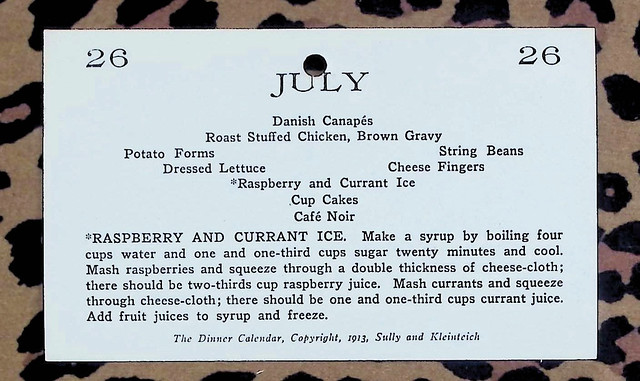
Potato Forms might be another name for Potato Moulds.
This project is supported by my Patrons on Patreon and donations from other enthusiasts of historic cookery. With your help I can acquire the unusual ingredients and equipment and do the research needed to continue my culinary adventures. Thank you so much!
This project is supported by my Patrons on Patreon and donations from other enthusiasts of historic cookery. With your help I can acquire the unusual ingredients and equipment and do the research needed to continue my culinary adventures. Thank you so much!
These days “sago” is often a synonym for tapioca, but they come from different plants. Fannie is very specific: Tapioca is starch obtained from tuberous roots of the bitter cassava, native of South America. Sago is starch obtained from sago palms, native of India. (The Boston Cooking-School Cook Book, p. 6)
This project is supported by my Patrons on Patreon and donations from other enthusiasts of historic cookery. With your help I can acquire the unusual ingredients and equipment and do the research needed to continue my culinary adventures. Thank you so much!
This project is supported by my Patrons on Patreon and donations from other enthusiasts of historic cookery. With your help I can acquire the unusual ingredients and equipment and do the research needed to continue my culinary adventures. Thank you so much!
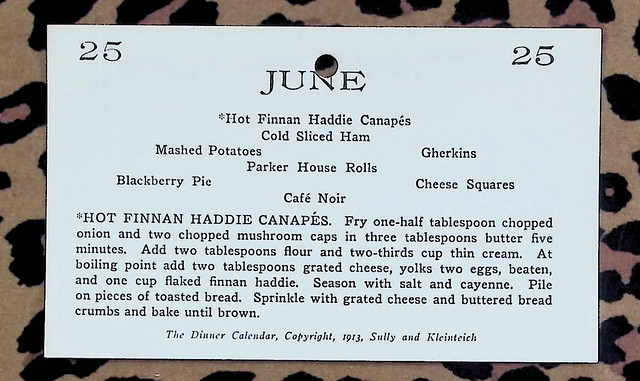
No one could have known when this menu was created, but today was a most momentous day. Archduke Franz Ferdinand and Sophie, the Duchess of Hohenberg were assassinated in Sarajevo. The tragic event launched Europe into war.
This project is supported by my Patrons on Patreon and donations from other enthusiasts of historic cookery. With your help I can acquire the unusual ingredients and equipment and do the research needed to continue my culinary adventures. Thank you so much!
This project is supported by my Patrons on Patreon and donations from other enthusiasts of historic cookery. With your help I can acquire the unusual ingredients and equipment and do the research needed to continue my culinary adventures. Thank you so much!
This project is supported by my Patrons on Patreon and donations from other enthusiasts of historic cookery. With your help I can acquire the unusual ingredients and equipment and do the research needed to continue my culinary adventures. Thank you so much!
We are not having leftover meat from Sunday today. This seems more like a luncheon than dinner.
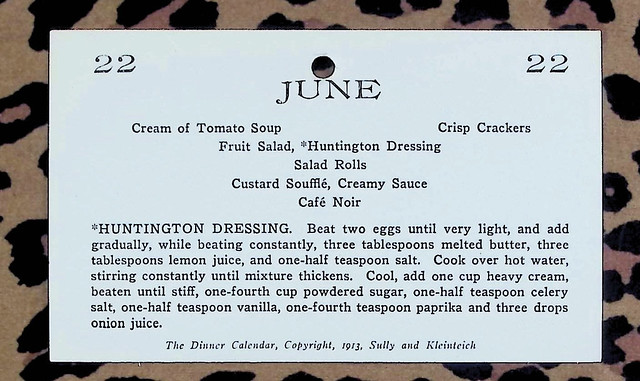
There are a lot of options for fruit salad in Fannie Farmer’s cook books. This one is going to be on the savory side, a salad course rather than a dessert. Following some of the existing recipes, you could arrange slices of your favorite fruits, like grapefruit, orange, banana, and/or grapes and maybe some walnuts, on lettuce and pour over this savory dressing.
This project is supported by my Patrons on Patreon and donations from other enthusiasts of historic cookery. With your help I can acquire the unusual ingredients and equipment and do the research needed to continue my culinary adventures. Thank you so much!
In 1914 June 19 was a Friday. You know what I’m going to say… fish!
Bread sticks and dinner rolls and crackers seems a bit excessive.
This project is supported by my Patrons on Patreon and donations from other enthusiasts of historic cookery. With your help I can acquire the unusual ingredients and equipment and do the research needed to continue my culinary adventures. Thank you so much!
This was the first menu card I shared with the Mid-Century Menu Group on Facebook, joining daily menus and recipes from Meta Given’s The Modern Family Cook Book from 1948. And from there this project was launched.
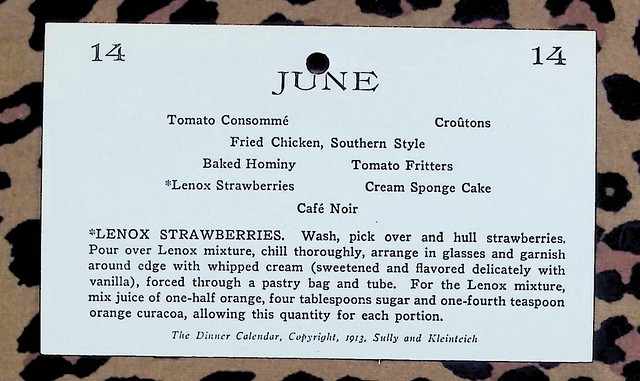
Our sixth strawberry dessert this month and I tried it out!
After testing this out, I took my own suggestion. I sliced the strawberries and soaked them in the Lenox mixture, then heaped them on toasted biscuits, and topped with decorative globs of whipped cream (unsweetened, with a hint of almond extract). A delightful variation!
Although I said that the strawberries may have been named for the resort town of Lenox, MA, Mr. Scratch points out that they may have instead been named for The Lenox Hotel in Copley Square. Built in 1900, it was once the tallest building in Boston and is still operational today. This seems like more plausible source for the name since there is a recipe for Lenox Punch in the 1905 edition of The Boston Cooking-School Cook Book, but not the 1896.
This project is supported by my Patrons on Patreon and donations from other enthusiasts of historic cookery. With your help I can acquire the unusual ingredients and equipment and do the research needed to continue my culinary adventures. Thank you so much!
 This project is supported by my Patrons on Patreon and donations from other enthusiasts of historic cookery. With your help I can acquire the unusual ingredients and equipment and do the research needed to continue my culinary adventures. Thank you so much!



 365 Kitchen Cabinet