March 18

03-18
In 1914 March 18 was a Wednesday. As usual for the day after a special menu, we get the recipe for the day before and no menu for the day itself.

The Irish Iceberg is a renaming of “Icebergs” on page 437 of The Boston Cooking-School Cook Book. I’m not sure how well lemon and mint go together…
“Leaf green” is a food coloring. In her recipe for Crême de Menthe Ice, just above in the cook book, she specifically calls for Burnett’s. Joseph Burnett was a Boston chemist who developed a line of extracts, perfumes and other toiletries, and food colorings.

Crême de Menthe was invented in 1885 by chemist Émile Giffard in Angers, France. The original liqueur was clear. A couple of years later he developed the green version.

M2This project is supported by my Patrons on Patreon and donations from other enthusiasts of historic cookery. With your help I can acquire the unusual ingredients and equipment and do the research needed to continue my culinary adventures. Thank you so much!

March 11

03-11

Fried Smelts
*Huntington Cole Slaw
Pan-broiled Lamb Chops
Parisian Potatoes
Creamed Carrots
Honeycomb Pudding, Creamy Sauce

In 1914 March 11 was a Wednesday.

The recipe for Fried Smelts includes an unusual garnish alongside the expected parsley and lemon — fried gelatin. This was made with sheets of gelatin quickly fried until it turned white.

The Huntingtons were a prominent New England family and Ralph Huntington was involved with filling in the Back Bay. Fannie Farmer’s cooking school (after she left the Boston Cooking School) was located at 30 Huntington Avenue, which was named for him.

M2This project is supported by my Patrons on Patreon and donations from other enthusiasts of historic cookery. With your help I can acquire the unusual ingredients and equipment and do the research needed to continue my culinary adventures. Thank you so much!
March 4

03-04
Roast Ribs of Beef
Savory Potatoes
Mashed Turnips
*Richmond Corn Cakes
Celery Mayonnaise
Orange Cream Sherbet
Chocolate Nut Wafers

In 1914 March 4 was a Wednesday.

Seven-eighth cup is so precise! If you happen to be missing that one from your measuring cup collection, it’s 3/4 cup plus 2 tablespoons.

M2This project is supported by my Patrons on Patreon and donations from other enthusiasts of historic cookery. With your help I can acquire the unusual ingredients and equipment and do the research needed to continue my culinary adventures. Thank you so much!

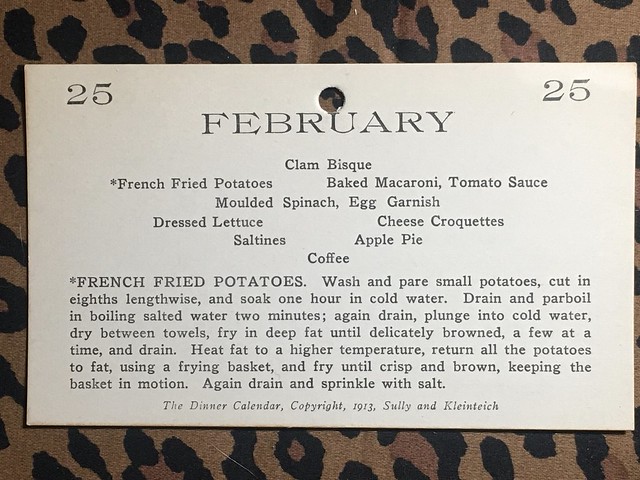
February 25

02-25
Clam Bisque
*French Fried Potatoes
Baked Macaroni, Tomato Sauce
Moulded Spinach, Egg Garnish
Dressed Lettuce
Cheese Croquettes
Saltines
Apple Pie
Coffee

In 1914 February 25 was a Wednesday. It’s also Ash Wednesday, which may be why it’s a meatless menu.

For a simple dish, that macaroni involves consulting a number of recipes. You’re supposed to cook it like Baked Macaroni, but with tomato sauce. The Baked Macaroni  recipe tells you to start with Macaroni with White Sauce. Going to that recipe sends you to Boiled Macaroni.

M2This project is supported by my Patrons on Patreon and donations from other enthusiasts of historic cookery. With your help I can acquire the unusual ingredients and equipment and do the research needed to continue my culinary adventures. Thank you so much!
February 18

02-18
Baked Stuffed Haddock, Hollandaise Sauce
Julienne Potatoes
Dinner Rolls
*Cole Slaw
Macedoine Jelly
Toasted Crackers
Pimiento Cheese
Café Noir

In 1914 February 18 was a Wednesday.

I haven’t found a recipe for Macedoine Jelly. I think it’s a dessert, although the Boston Cooking-School Cook Book glossary defines Macédoine as A mixture of several kinds of vegetables. A New Book of Cookery has a recipe for Macedoine of Fruit, in which the fruit is suspended in gelatin.

M2This project is supported by my Patrons on Patreon and donations from other enthusiasts of historic cookery. With your help I can acquire the unusual ingredients and equipment and do the research needed to continue my culinary adventures. Thank you so much!

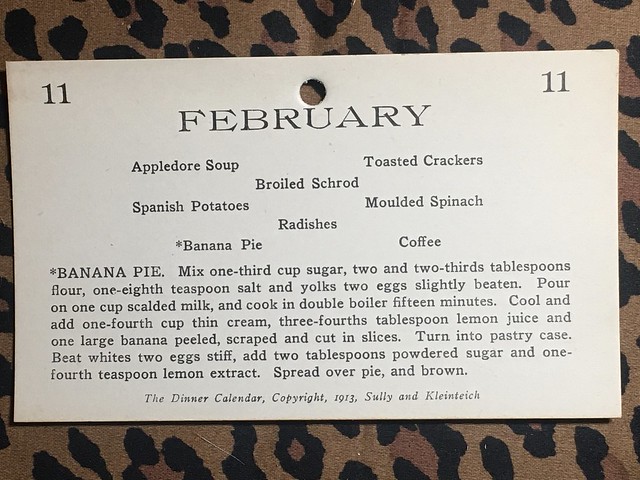
February 11

02-11
Appledore Soup
Toasted Crackers
Broiled Schrod
Spanish Potatoes
Moulded Spinach
Radishes
*Banana Pie
Coffee

In 1914 February 11 was a Wednesday.

Appledore Soup is just potato soup with some ketchup stirred in. The name comes from Appledore House, a hotel on the Isles of Shoals, Maine. For many years the cook there was Maria Parloa, who wrote The Appledore Cook Book and was one of the first instructors at The Boston Cooking School.

What is schrod? Also spelled “scrod”, it’s a young whitefish, usually too small to be filleted. These days, scrod is the term used for any young whitefish, but Fannie Farmer specifically says it is a young cod and that haddock can be dressed the same.

M2This project is supported by my Patrons on Patreon and donations from other enthusiasts of historic cookery. With your help I can acquire the unusual ingredients and equipment and do the research needed to continue my culinary adventures. Thank you so much!
February 4, Vegetable Menu

02-04
French Fried Potatoes
*Corn Soufflé
Spinach à la Béchamel
Dressed Lettuce with Pimiento Ribbons
Baked Indian Pudding
Wafer Crackers
Cream Cheese
Café Noir

In 1914 February 4 was a Wednesday.

An all-vegetable meal must have been so unusual that it got its own special day.

Wafer Crackers were whole wheat crackers made by the Johnson Educator Food Company in Boston.

M2This project is supported by my Patrons on Patreon and donations from other enthusiasts of historic cookery. With your help I can acquire the unusual ingredients and equipment and do the research needed to continue my culinary adventures. Thank you so much!

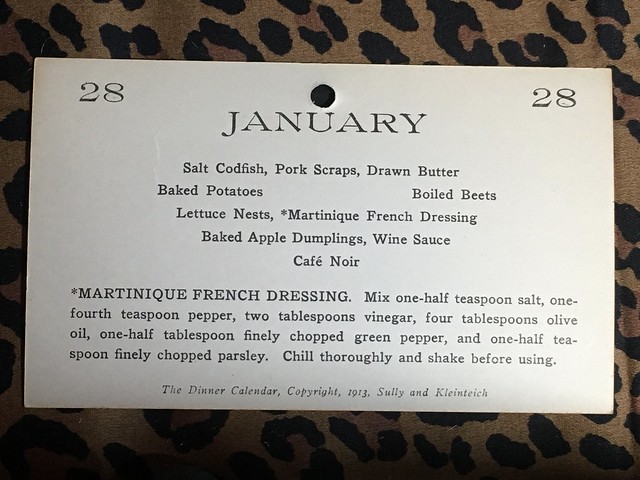
January 28

01-28
Salt Codfish, Pork Scraps, Drawn Butter
Baked Potatoes
Boiled Beets
Lettuce Nests, *Martinique French Dressing
Baked Apple Dumplings, Wine Sauce
Café Noir

In 1914 January 28 was a Wednesday.

I have yet to find a recipe for just Salt Codfish. Pork Scraps, also known as cracklings, are the crunchy bits of pork left over after lard has been rendered.

M2This project is supported by my Patrons on Patreon and donations from other enthusiasts of historic cookery. With your help I can acquire the unusual ingredients and equipment and do the research needed to continue my culinary adventures. Thank you so much!

January 21

01-21
No menu today, just the recipe from the day before. Maybe we’re supposed to eat leftovers.

This happens throughout the year — one day has a big, festive menu and the featured recipe is on the following day without a new menu. So the claim of 365 menus and 365 recipes is slightly exaggerated.

M2This project is supported by my Patrons on Patreon and donations from other enthusiasts of historic cookery. With your help I can acquire the unusual ingredients and equipment and do the research needed to continue my culinary adventures. Thank you so much! To become a Patron, go to my Patreon page or donate here.
January 14

01-14
French Smelts, Sauce Tartare
Shredded Potatoes
French String Beans
*Fruit Salad, French Dressing
Mosaic Sandwiches
Apple Pie
Cheese Slices
Café Noir

In 1914 January 14 was a Wednesday.

The fruit salad is served with a vinaigrette, so consider it the salad course and not a dessert.

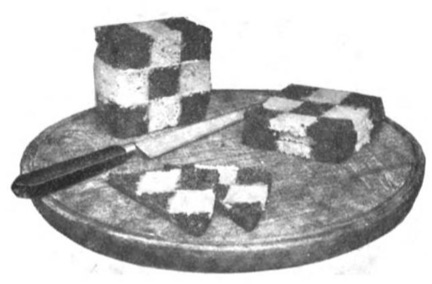
Mosaic Sandwiches are just bread and butter sandwiches, but with two colors of bread cut and assembled to form a checkerboard pattern.
Mosaic SandwichesPhoto from A New Book of Cookery (1912).

Apple pie with cheese is a pretty common New England treat. I think it’s best with a sharp cheddar.

M2This project is supported by my Patrons on Patreon and donations from other enthusiasts of historic cookery. With your help I can acquire the unusual ingredients and equipment and do the research needed to continue my culinary adventures. Thank you so much!