January 28

01-28
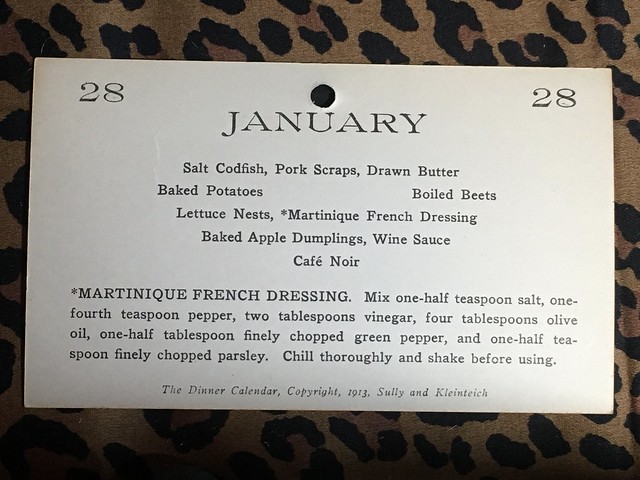
Salt Codfish, Pork Scraps, Drawn Butter
Baked Potatoes
Boiled Beets
Lettuce Nests, *Martinique French Dressing
Baked Apple Dumplings, Wine Sauce
Café Noir

In 1914 January 28 was a Wednesday.

I have yet to find a recipe for just Salt Codfish. Pork Scraps, also known as cracklings, are the crunchy bits of pork left over after lard has been rendered.

M2This project is supported by my Patrons on Patreon and donations from other enthusiasts of historic cookery. With your help I can acquire the unusual ingredients and equipment and do the research needed to continue my culinary adventures. Thank you so much!

January 27

01-27

*Roast Hamburg Steak
Potato Balls
Glazed Carrots
Endive Salad
Butter Thins
Jellied Walnuts
Chocolate Wafers

.In 1914 January 27 was a Tuesday.

Roast Hamburg Steak is basically meatloaf.

Butter Thins were a brand of cracker made by the Johnson Educator Biscuit Company, a cracker company in Boston.

M2This project is supported by my Patrons on Patreon and donations from other enthusiasts of historic cookery. With your help I can acquire the unusual ingredients and equipment and do the research needed to continue my culinary adventures. Thank you so much!

January 24

01-24

Hot Boiled Corned Beef
Boiled Potatoes
Smothered Cabbage
Mashed Turnips
Grape Fruit Salad
Wafer Crackers
*Coffee Sponge
Café Noir

In 1914 January 24 was a Saturday.

Corn beef and cabbage — a classic!

M2This project is supported by my Patrons on Patreon and donations from other enthusiasts of historic cookery. With your help I can acquire the unusual ingredients and equipment and do the research needed to continue my culinary adventures. Thank you so much!

January 23

01-23
Chicken Soup with Rice
Baked Halibut, Hollandaise Sauce
Shredded Potatoes
Cabbage and Celery Salad
*Escalloped Apples

In 1914 January 23 was a Friday. Guess what? Fish again!

M2This project is supported by my Patrons on Patreon and donations from other enthusiasts of historic cookery. With your help I can acquire the unusual ingredients and equipment and do the research needed to continue my culinary adventures. Thank you so much!

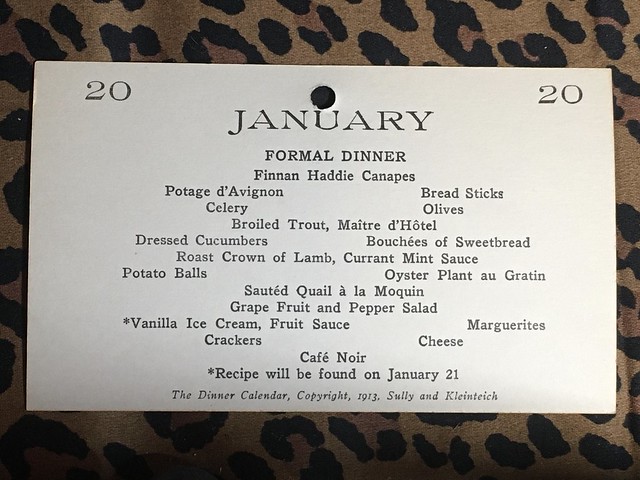
January 20, Formal Dinner

01-20
Finnan Haddie Canapés
Potage d’Avignon
Bread Sticks
Celery
Olives
Broiled Trout, Maître d’Hôtel
Dressed Cucumbers
Bouchées of Sweetbread
Roast Crown of Lamb, Currant Mint Sauce
Potato Balls
Oyster Plant au Gratin
Sautéd Quail à la Moquin
Grape Fruit and Pepper Salad
*Vanilla Ice Cream, Fruit Sauce
Marguerites
Crackers
Cheese
Café Noir

In 1914 January 20 was a Tuesday. Why are we having a formal dinner on Tuesday? It’s my sister’s birthday and that’s a good enough reason for me.

There is a lot going on in this meal…

Finnan Haddie is cold-smoked haddock. Our local butcher shop carries it, so I should give it a try.

Bouchées are small pastry cases.

The Potato Balls are shaped with a French vegetable cutter. They were used to cut fruits and vegetables into ball shapes, but I have yet to find an image of one, let alone an actual cutter. Let me know if you’ve ever seen one!

Oyster Plant is a common name for salsify and according to Fannie Farmer “Oyster plant is in season from October to March.” I haven’t found a recipe for Oyster Plant au Gratin, but you could probably make Potatoes au Gratin and substitute salsify root. Fannie Farmer says to cook it so: “Wash, scrape, and put at once into cold acidulated water to prevent discoloration. Cut in inch slices, cook in boiling salted water until soft, drain”.

Quail à la Moquin is presumably named after restauranteur Henri Mouquin. Mouquin came to New York from Switzerland, via Paris, and began his career as a waiter at the famed Delmonico’s. Mouquin opened three restaurants in New York, with his wife, Marie Granjean as chef. She is credited with introducing French onion soup to the United States.

There are two recipes for Marguerites in The Boston Cookery-School Cook Book. Both look like sweet little treats. One is a pastry and the other is more like divinity, but baked on saltines!

M2This project is supported by my Patrons on Patreon and donations from other enthusiasts of historic cookery. With your help I can acquire the unusual ingredients and equipment and do the research needed to continue my culinary adventures. Thank you so much!
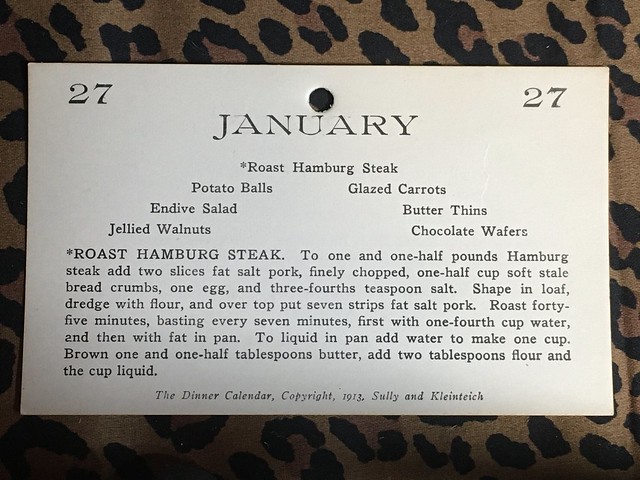
January 19

01-19
French Tomato Soup
Duchess Crusts
Cold Sliced Roast Beef
*Potato Salad
Dinner Rolls
Steamed Fruit Pudding, Brandy Sauce

In 1914 January 19 was a Monday.

We’re having the leftover beef from last night as simple cold meat. Very thrifty!
M2This project is supported by my Patrons on Patreon and donations from other enthusiasts of historic cookery. With your help I can acquire the unusual ingredients and equipment and do the research needed to continue my culinary adventures. Thank you so much!
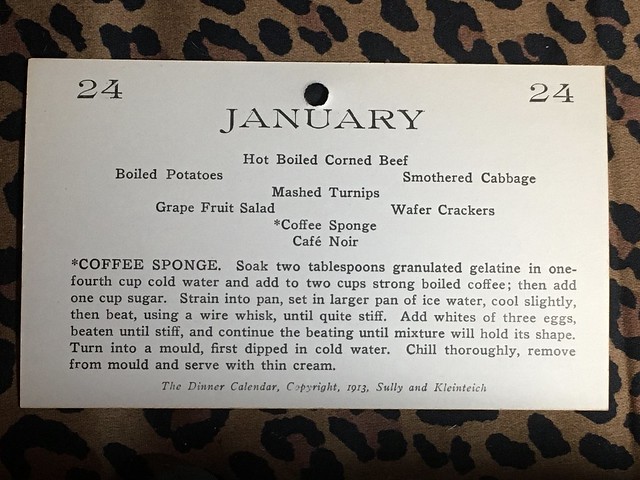
January 18

01-18
Caviare Canapés
Rump Beef Roast, Brown Gravy
Creamed Potatoes
Glazed Silver Skins
Lettuce and Radish Salad
Peanut Brown Bread Sandwiches
*Canton Cream
Raised Loaf Cake
Café Noir

In 1914 January 18 was a Sunday.

Silver skins are another name for pearl onions — small onions often creamed or pickled.

Canton ginger is ginger preserved in syrup. The Canton Cream  uses both the ginger and its syrup.

The Raised Loaf Cake is made with bread sponge, a mixture of yeast, liquid, and flour that’s allowed to ferment before the rest of the bread ingredients are added.

M2This project is supported by my Patrons on Patreon and donations from other enthusiasts of historic cookery. With your help I can acquire the unusual ingredients and equipment and do the research needed to continue my culinary adventures. Thank you so much!
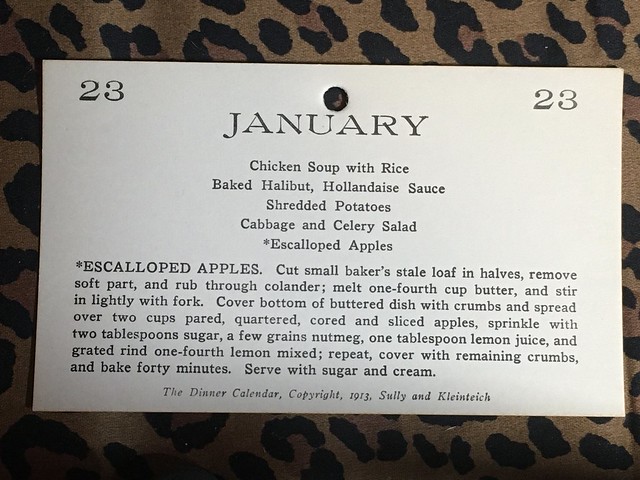
January 16

01-16
Celery Soup
Dinner Biscuits
Boiled Halibut, *Huntington Sauce
Mashed Potatoes
Tomato Soufflé
Fig Custard
Café Noir

In 1914 January 16 was a Friday. Fish again!

I am guessing the Huntington Sauce is in honor of Ralph Huntington, who was instrumental in the creation of Back Bay (for those not local, it’s a neighborhood that was built the 19th century on what was once a tidal bay) and for whom Huntington Avenue was named.

Perhaps today’s Mashed Potatoes are made from leftovers from yesterday’s Riced Potatoes.

M2This project is supported by my Patrons on Patreon and donations from other enthusiasts of historic cookery. With your help I can acquire the unusual ingredients and equipment and do the research needed to continue my culinary adventures. Thank you so much!

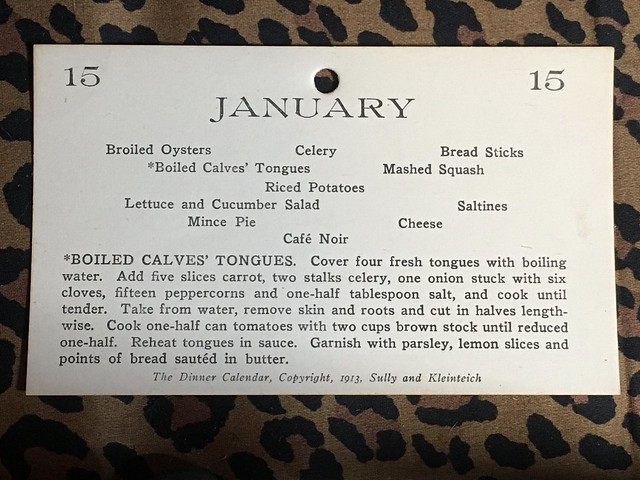
January 15

01-15

Broiled Oysters
Celery
Bread Sticks
*Boiled Calves’ Tongues
Mashed Squash
Riced Potatoes
Lettuce and Cucumber Salad
Saltines
Mince Pie
Cheese
Café Noir

In 1914 January 15 was a Thursday.

Ricing potatoes was a pretty common treatment at this time, which seems to have fallen out of favor. Does anyone use a ricer? I’ve got one on my wish list…

The lettuce and cucumber salad is deceptively simple, but the presentation is everything — alternating leaves of lettuce and slices of cucumber. 
A Chapon. Remove a small piece from end of French loaf and rub over with a clove of garlic, first dipped in salt. Place in bottom of salad bowl before arranging salad. A chapon is often used in vegetable salads, and gives an agreeable additional flavor.” (The Boston Cooking School Cook Book, p. 323)

M2This project is supported by my Patrons on Patreon and donations from other enthusiasts of historic cookery. With your help I can acquire the unusual ingredients and equipment and do the research needed to continue my culinary adventures. Thank you so much!

January 14

01-14
French Smelts, Sauce Tartare
Shredded Potatoes
French String Beans
*Fruit Salad, French Dressing
Mosaic Sandwiches
Apple Pie
Cheese Slices
Café Noir

In 1914 January 14 was a Wednesday.

The fruit salad is served with a vinaigrette, so consider it the salad course and not a dessert.

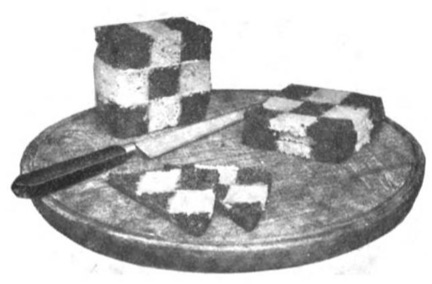
Mosaic Sandwiches are just bread and butter sandwiches, but with two colors of bread cut and assembled to form a checkerboard pattern.
Mosaic SandwichesPhoto from A New Book of Cookery (1912).

Apple pie with cheese is a pretty common New England treat. I think it’s best with a sharp cheddar.

M2This project is supported by my Patrons on Patreon and donations from other enthusiasts of historic cookery. With your help I can acquire the unusual ingredients and equipment and do the research needed to continue my culinary adventures. Thank you so much!