February 1


02-01

Duchess Soup
Bread Sticks
Roast Tip of Sirloin, Brown Gravy
Yorkshire Pudding
Franconia Potatoes
Creamed Cauliflower
Celery and Nut Salad
Brown Bread Sandwiches
Coffee Ice Cream
*Mock Angel Cake

In 1914  February 1 was a Sunday.

As long as you’re boiling potatoes for Franconia Potatoes, boil enough for the German Potato Salad tomorrow.

It’s a Mock Angel Cake because it only uses 2 egg whites; an actual Angel Cake needs 8.

M2This project is supported by my Patrons on Patreon and donations from other enthusiasts of historic cookery. With your help I can acquire the unusual ingredients and equipment and do the research needed to continue my culinary adventures. Thank you so much!

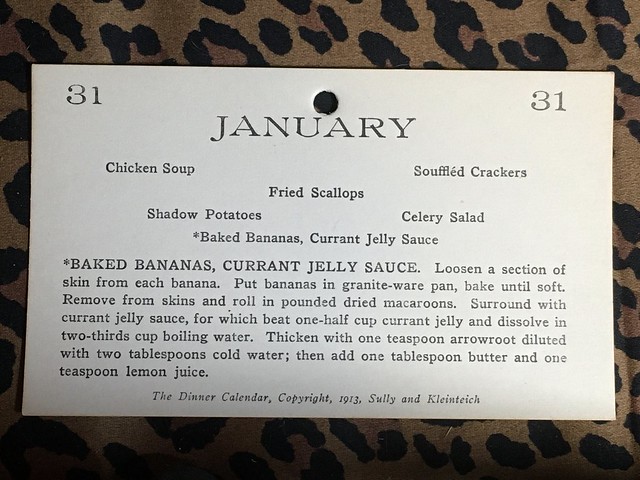
January 31

01-31
Chicken Soup
Souffléd Crackers
Fried Scallops
Shadow Potatoes
Celery Salad
*Baked Bananas, Currant Jelly Sauce

In 1914 January 31 was a Saturday.

The intriguingly named Shadow Potatoes, also called Saratoga Chips, are thinly-sliced, deep-fried potatoes, that is, potato chips!

M2This project is supported by my Patrons on Patreon and donations from other enthusiasts of historic cookery. With your help I can acquire the unusual ingredients and equipment and do the research needed to continue my culinary adventures. Thank you so much!

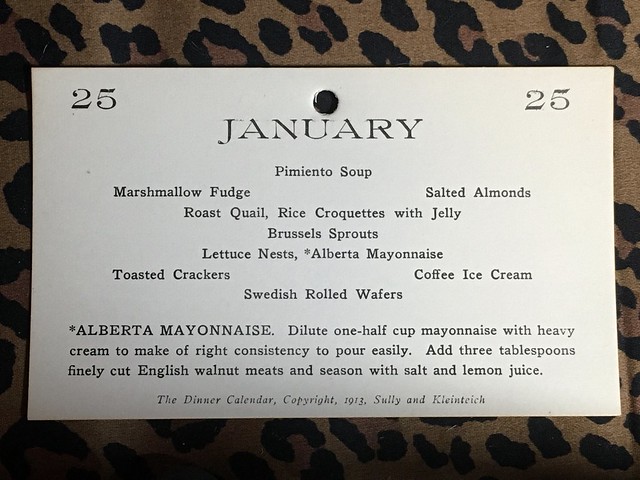
January 25

01-25

Pimiento Soup
Marshmallow Fudge
Salted Almonds
Roast Quail, Rice Croquettes with Jelly
Brussels Sprouts
Lettuce Nests, *Alberta Mayonnaise
Toasted Crackers
Coffee Ice Cream
Swedish Rolled Wafers

In 1914 January 25 was a Sunday.

I have no idea what is going on with this menu. Dessert seems to come right after the soup course, but we also have dessert after the salad course. I guess I can see salted almonds as a crunchy accompaniment to soup, but marshmallow fudge?

M2This project is supported by my Patrons on Patreon and donations from other enthusiasts of historic cookery. With your help I can acquire the unusual ingredients and equipment and do the research needed to continue my culinary adventures. Thank you so much!

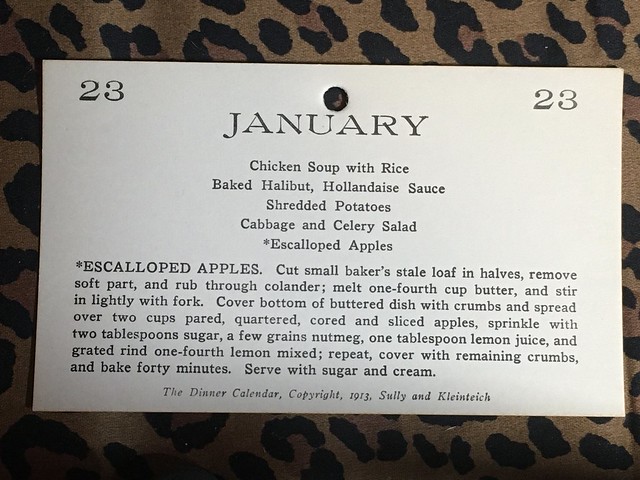
January 23

01-23
Chicken Soup with Rice
Baked Halibut, Hollandaise Sauce
Shredded Potatoes
Cabbage and Celery Salad
*Escalloped Apples

In 1914 January 23 was a Friday. Guess what? Fish again!

M2This project is supported by my Patrons on Patreon and donations from other enthusiasts of historic cookery. With your help I can acquire the unusual ingredients and equipment and do the research needed to continue my culinary adventures. Thank you so much!

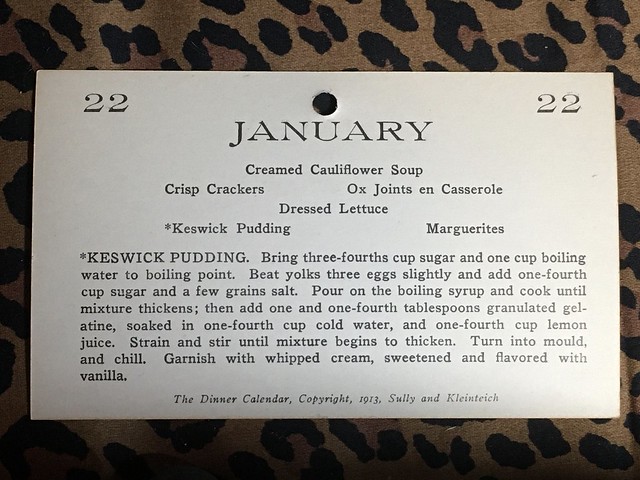
January 22

01-22
Creamed Cauliflower Soup
Crisp Crackers
Ox Joints en Casserole
Dressed Lettuce
*Keswick Pudding
Marguerites

In 1914 January 22 was a Thursday.

Keswick is a market town in the Lake District in England, associated with a number of poets. Maybe that’s why the pudding is named after it.

The Marguerites may be left over from the formal dinner on the 20th.

M2This project is supported by my Patrons on Patreon and donations from other enthusiasts of historic cookery. With your help I can acquire the unusual ingredients and equipment and do the research needed to continue my culinary adventures. Thank you so much!

January 19

01-19
French Tomato Soup
Duchess Crusts
Cold Sliced Roast Beef
*Potato Salad
Dinner Rolls
Steamed Fruit Pudding, Brandy Sauce

In 1914 January 19 was a Monday.

We’re having the leftover beef from last night as simple cold meat. Very thrifty!
M2This project is supported by my Patrons on Patreon and donations from other enthusiasts of historic cookery. With your help I can acquire the unusual ingredients and equipment and do the research needed to continue my culinary adventures. Thank you so much!

January 16

01-16
Celery Soup
Dinner Biscuits
Boiled Halibut, *Huntington Sauce
Mashed Potatoes
Tomato Soufflé
Fig Custard
Café Noir

In 1914 January 16 was a Friday. Fish again!

I am guessing the Huntington Sauce is in honor of Ralph Huntington, who was instrumental in the creation of Back Bay (for those not local, it’s a neighborhood that was built the 19th century on what was once a tidal bay) and for whom Huntington Avenue was named.

Perhaps today’s Mashed Potatoes are made from leftovers from yesterday’s Riced Potatoes.

M2This project is supported by my Patrons on Patreon and donations from other enthusiasts of historic cookery. With your help I can acquire the unusual ingredients and equipment and do the research needed to continue my culinary adventures. Thank you so much!

January 13

01-13
Royal Soup
Imperial Sticks
Breaded Lamb Chops, Tomato Sauce
*Baked Potatoes, Hotel Style
Moulded Spinach
Wafer Crackers
Cream Cheese
Bar-le-duc Strawberries
Café Noir

In 1914 January 13 was a Tuesday.

Royal Soup with Imperial Sticks sounds so grand! The reality is a very frugal soup with toasted stale bread.

I found a recipe for Breaded Mutton Chops, but not lamb. It should work about the same, maybe with a shortened cooking time.

Bar-le-Duc strawberries are a kind of preserve. The town is famous for their currant preserves, in which the ripe currants are hand-seeded using a goose quill, leaving the fruit intact, like little pearls or caviar. I’m told that they pop delightfully in your mouth, but I haven’t been lucky enough to taste it. I also haven’t found much information about the strawberry version, but I assume it was just as delicious and just as much of a status symbol.

UPDATE: Canning, Preserving and Pickling by Marion Harris Neil (1914) has a recipe!

STRAWBERRY BAR-LE-DUC, p. 124
Perfect strawberries. Sugar.
Three things are indispensable in making strawberry bar-le-duc. The first is strong, steady sunshine, the second, hot platters or plates, the third plenty of window-glass.
The fruit should be of good flavor, the sugar pure. To every pound of fruit allow three cupfuls of sugar. Heat the sugar on plates in the oven, taking care not to let it melt or get too brown. It should be as hot as possible without melting.
Spread a thin layer of hot sugar over the bottoms of hot platters or deep plates, then a layer of fruit and then another layer of sugar.
Cover the platters with a clean sheet of window-glass and place outdoors in the hot sun or in a sunny window. If the fruit is outdoors it must be brought in when the sun sets and put in a dry place indoors.
Return to the sun in the morning. In a few days the fruit will grow plump and firm and the syrup almost a jelly.
Pack in tumblers and seal.
If the syrup is not thick, boil until clear and thickened, then pour in the glasses over the fruit.

M2This project is supported by my Patrons on Patreon and donations from other enthusiasts of historic cookery. With your help I can acquire the unusual ingredients and equipment and do the research needed in my quest for greater historical accuracy in my culinary adventures. Thank you so much!